Cable Railing vs Wood Railing for Decks in Kansas City
Cable railing vs wood railing usually gets decided on appearance, then re-decided three years later when the maintenance schedule shows up. Both systems pass inspection when built correctly, but they load the deck frame differently, they age differently through Kansas City winters, and they demand different things from the homeowner. The decision belongs at the framing stage, not after the decking goes down, because one of these systems changes what the substructure has to carry. Any deck railing installation in Kansas City works better when the system gets specified alongside the joist and post layout.
How Cable Deck Railing Systems Work
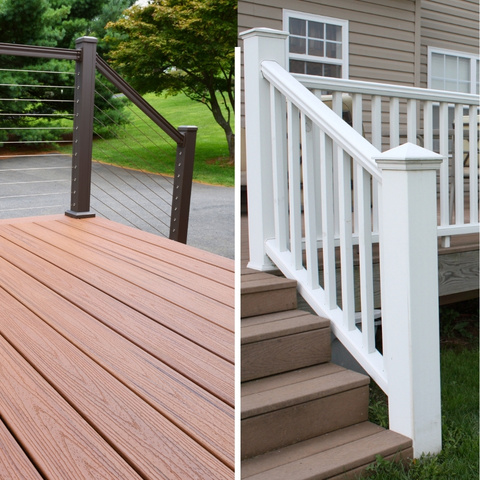
A cable railing system runs horizontal stainless steel cables through drilled posts, tensioned end to end and anchored at terminal posts. The infill disappears visually, which is the entire point on a deck with a view worth keeping.
Most residential systems use 1/8-inch or 3/16-inch cable. Type 316 stainless resists chloride and moisture corrosion better than type 304, which matters near pools, hot tubs, and any deck that takes deicing salt runoff.
The cables carry tension, and that tension has to terminate somewhere. Every run pulls against the end posts continuously, in every season, for the life of the railing.
How Wood Deck Railing Systems Work
Wood railing uses vertical balusters, typically 2×2 stock, fastened between a top and bottom rail spanning between posts. Loads transfer through the posts into the rim joist and framing below, and nothing pulls laterally on the terminal posts.
The system is forgiving. A cracked baluster gets replaced in an afternoon without touching anything else in the run. Sections can be built on site and adjusted to fit stairs, angles, and irregular deck shapes without ordering custom components.
Wood also accepts finish treatment, which means color and profile can match existing trim, siding, or an older deck section that stays in place.
Deck Railing Code Requirements Both Systems Must Meet
Code does not care which system gets installed. It cares about height, openings, and load, and both systems have to satisfy the same requirements.
Guards become mandatory when the walking surface sits more than 30 inches above grade, measured within 36 inches horizontally from the edge. Residential guard height runs a 36-inch minimum measured from the deck surface to the top of the rail.
Openings cannot allow a 4-inch sphere to pass through. Guards also have to resist a 200-pound concentrated load applied in any direction at the top, which is the requirement that catches undersized posts and weak rim joist connections.
That 4-inch rule is where cable systems get technical. Cable deflects under hand pressure, so spacing measured at rest is not what an inspector tests. Cable runs generally need to sit at 3 inches or less on center, and intermediate posts or spacer pickets typically go in at 4-foot intervals or tighter to control spread between terminals. Wood balusters hold their spacing permanently and only need to be laid out under 4 inches clear.
Adoption cycles differ between Kansas City, Johnson County, and the smaller municipalities, so confirm the current amended code with the local building department before ordering material. The same applies to deck permit requirements in Kansas City, which vary depending on deck height and attachment method.
Framing and Post Loads Differ Significantly
This is the difference that costs money when it gets missed. Each tensioned cable run pulls at roughly 200 to 250 pounds. A guard section with a dozen cable runs puts well over 2,000 pounds of sustained tension on the terminal post, and that load never releases.
Terminal and corner posts on cable systems need heavier stock, through-bolted connections, and blocking at the rim joist. Notched 4×4 posts that work fine under a wood railing will deflect visibly under cable tension, and once a terminal post pulls out of plumb, every cable in that run loses tension at once.
Wood railing posts carry the 200-pound code load and nothing beyond it. Standard tension ties and properly blocked rim joist connections handle it.
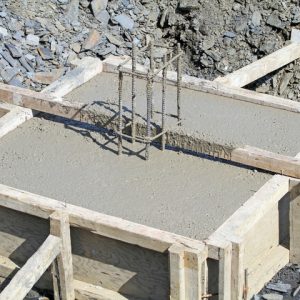
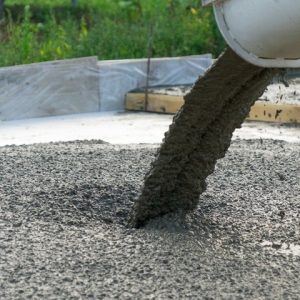
Post support traces back to the substructure. Deck posts bear on footings that have to reach past the 36-inch frost depth used across Kansas City, and cable terminal posts sitting on undersized piers transfer their sustained pull into something that will eventually move. Review footing depth requirements before finalizing a cable layout, and confirm the concrete footings and flatwork under the deck are sized for the loads the railing adds.
Maintenance Through Kansas City Freeze-Thaw Cycles
Kansas City sits in Climate Zone 4A, which means repeated freeze-thaw cycling from late fall through early spring, high summer UV, and wide humidity swings. Both systems respond, in different ways.
Wood railing needs cleaning and refinishing on a recurring cycle. Moisture drives movement in the balusters and rails, fasteners work loose over time, and neglected end grain at cut edges is where rot starts. Refinishing keeps the system sound, and skipping it for several seasons is what shortens the life of an otherwise well-built railing.
Cable railing needs re-tensioning. Stainless cable stretches during the first year after installation, and thermal cycling adds seasonal movement after that. Loose cable fails the 4-inch sphere test even when the original layout passed inspection, so tension checks belong on the annual list. Hardware needs a wipe-down where salt or standing moisture collects, particularly at the swage fittings.
The practical difference: wood maintenance is visible and easy to schedule, and cable maintenance is easy to forget until a cable sags enough to notice.
Cost Considerations Without the Sticker Shock
Cable systems carry a higher material cost per linear foot because of the stainless hardware, and they carry a higher labor cost because of the framing upgrades, precise post spacing, and drilling tolerances required. The premium concentrates on longer runs and on decks with multiple corners, since every direction change needs a terminal.
Wood railing costs less to install and more to own over twenty years, since refinishing is recurring labor. Cable costs more to install and less to maintain, provided the tension checks actually happen.
Neither number is the whole picture. Railing scope often shifts once the full deck design comes together, and flexible project financing lets the framing get built right the first time instead of getting value-engineered into a system that needs rework later.
Which Railing Fits Your Deck
Cable railing earns its cost on elevated decks with a sightline worth protecting: a wooded lot, a slope, a view across open ground. It also fits contemporary architecture where a vertical baluster profile would fight the rest of the house.
Wood railing fits decks where the view is a neighbor’s fence, where the deck shape includes multiple angles and stair sections, and where matching existing exterior trim carries more weight than transparency. It is also the practical answer when the deck section being replaced ties into an older run that stays.
Mixed approaches work. Cable across the primary view section and wood on the stairs and side runs keeps the sightline where it matters and controls both cost and framing complexity. That combination shows up regularly on custom deck builds in Kansas City, and on premium home renovation projects where the deck ties into a broader exterior scope.
Making the Call
Three factors decide it. The framing has to be built for the system before the decking goes on, since cable tension is a design load and not an afterthought. The maintenance habit has to match the system, because a re-tensioning schedule that never happens ends in a failed inspection. And the sightline has to actually be worth the premium, since cable buys transparency and little else structurally.
Both systems pass code. Both last decades when built and maintained correctly. The wrong choice is the one made after the substructure is already framed.
Planning a deck railing build or replacement in Kansas City?
We build the framing to match the railing system from day one. Call (816) 835-2094 for a free quote.