Preventing concrete cracks in Kansas City starts before the first pour, with the mix, the base, and the joints. Some hairline cracking is normal as concrete cures, but the deep, spreading cracks that ruin a new driveway or patio trace back to a short list of avoidable mistakes. Here is what causes them and how to keep them out of your slab.
What Makes Concrete Crack
Concrete cracks for a few predictable reasons. Knowing them is the first step to preventing them.
- Drying shrinkage. As concrete loses its excess mix water, it shrinks. Concrete shrinks about 1/8 inch over every 20 feet, and the more water in the mix, the more it moves. This is the most common source of cracking.
- Plastic shrinkage. When the surface dries faster than bleed water can rise, fine cracks open in the first hours before the slab hardens. Heat, wind, and low humidity drive it.
- Freeze-thaw damage. Water works into surface cracks, freezes overnight, expands, and breaks the surface apart. Metro winters cycle through this repeatedly.
- Weak or uneven subgrade. A base that was not compacted properly settles unevenly, and local clay soil swells and shrinks with moisture, pulling the slab apart.
- Missing or poorly placed control joints. Without a planned weak point, concrete cracks wherever internal stress finds a path.
Control the Mix and the Water
Excess water is the enemy of a crack-free slab. A wetter mix is easier to pour, but every bit of extra water evaporates later and pulls the concrete tighter as it goes. A proper water-cement ratio keeps shrinkage in check. When a mix needs to flow better, the answer is a water-reducing admixture, not a bucket of water on site. This single decision separates a slab that ages well from one that maps with cracks in its first year.
Prepare a Solid Base
A slab is only as stable as the ground under it. A crushed-stone base, compacted in lifts and graded for drainage, gives the concrete uniform support so no section settles more than another. Water that pools under a slab is a long-term problem, so drainage matters as much as compaction.
Metro clay soil deserves extra attention. It expands when wet and contracts when dry, and a slab poured straight onto uncontrolled clay moves with it. Moistening the subgrade before the pour also keeps it from wicking water out of the fresh concrete, which prevents plastic shrinkage cracks from the bottom up.
Place Control Joints Correctly
Control joints are planned cracks. They are grooves that create a weak line so the slab cracks where you want it to, hidden in the joint, instead of wandering across the surface. Three details decide whether they work:
- Spacing. In feet, joints should run no more than 2 to 3 times the slab thickness in inches. A standard 4-inch slab needs joints every 8 to 12 feet in both directions.
- Depth. Cut at least one-quarter of the slab thickness. On a 4-inch slab, that is a groove about 1 inch deep. Too shallow and the crack ignores it.
- Timing. Cut within roughly 6 to 18 hours of finishing, once the concrete is hard enough to resist raveling but before random cracking starts.
Keep the panels between joints as square as possible; long, narrow rectangles crack down the middle. And do not count on rebar or mesh to stop cracks. Reinforcement holds crack faces together after they form, but joints control where they happen.
Cure and Protect Against the Weather
Curing is where good work is won or lost. Concrete needs to hold its moisture while it gains strength, so the surface cannot be allowed to dry too fast. In hot, windy conditions, that means shade, wind breaks, or fogging, and scheduling the pour for the cooler part of the day.
For the metro’s freeze-thaw swings, an air-entrained mix builds in microscopic voids that give freezing water room to expand without spalling the surface. Sealing the finished slab and its joints keeps water out of the places that crack first, which matters most in a climate that freezes and thaws all winter.
When a Crack Is Normal and When It Is Not
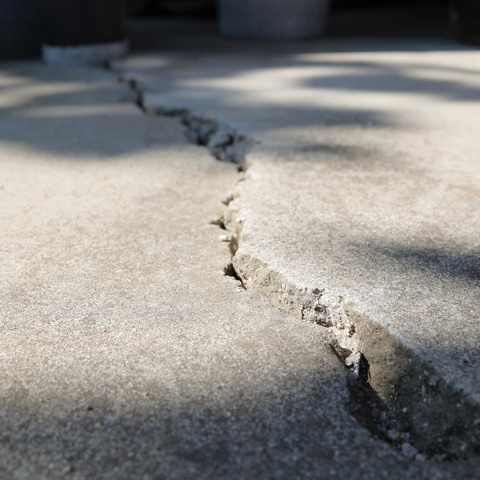
Not every crack is a defect. Thin, hairline shrinkage lines are cosmetic and show up on most slabs as they cure. What signals a real problem is movement: a crack that keeps widening, or one where one side sits higher than the other, points to subgrade settlement and is worth a professional look. Catching those early protects how long your concrete lasts before a small crack turns into a full replacement.
Keeping Cracks Out of Your Slab
Crack prevention is a chain of small decisions: a controlled mix, a compacted and drained base, correctly cut joints, careful curing, and a mix built for freeze-thaw. Miss one and the slab finds the weak link. Get them all right and a Kansas City driveway or patio can go decades with nothing worse than a few cosmetic lines.