Deck railing options are often the last decision on a new deck in Kansas City, after the size, boards and stairs are settled. That order causes problems, because the railing sets how the deck looks from the yard and carries most of the safety requirements an inspector checks. This guide covers the code basics, the main railing materials and styles, and the details that keep a railing solid for years.
Deck Railing Code Basics: Guards and Handrails
The residential code separates two components. A guard prevents falls from the open side of a deck or stair. A handrail is the graspable rail people hold while using stairs. One railing can serve both purposes, but it then has to meet both sets of rules.
These are the core requirements in the International Residential Code (IRC), as summarized by Fine Homebuilding:
- When a guard is required: where the deck surface is more than 30 inches above the ground at any point within 36 inches horizontally of the edge.
- Guard height: at least 36 inches above the deck surface. On the open side of stairs, at least 34 inches measured from the line of the tread nosings.
- Openings: a 4-inch sphere must not pass through the guard, including the gap under the bottom rail. On the open sides of stairs the limit is 4 3/8 inches, and the triangle formed by the tread, riser and bottom rail must not pass a 6-inch sphere.
- Strength: the top of a guard or handrail must resist a 200-pound concentrated load applied at any point and in any direction. This applies to optional guards on low decks as well as required ones.
- Handrails: required on at least one side of any stair with four or more risers, mounted 34 to 38 inches above the nosings, with a profile a hand can wrap around.
Code editions and local amendments vary across the metro. Kansas City, Missouri currently enforces a residential code based on the 2018 IRC, and the city lists a 2024 residential code update in draft on its building code page. Johnson County cities adopt their own editions, and some jurisdictions require taller guards on high decks. Confirm the rules with the local building department before ordering materials.
Deck Railing Materials Compared
Every material below can meet code when it is installed correctly. The differences are appearance, maintenance and cost, and each one can be part of a professional deck railing installation.
Pressure-Treated Wood
Pressure-treated lumber is the most common railing material and the lowest upfront cost. It can be painted or stained to match the house. It needs a sealer or stain every few years, and fasteners must be rated for contact with treated lumber, such as hot-dip galvanized or stainless steel.
Cedar
Cedar has a natural color and resists decay without chemical treatment. It weathers to gray unless it is sealed regularly. It costs more than treated lumber and is softer, so it dents more easily.
Composite and PVC Railing Systems
Composite and PVC systems come as kits with posts, rails, balusters and brackets designed to work together. They resist rot and do not need staining, only periodic cleaning. They cost more than wood, and components from different manufacturers should not be mixed, because each system is tested and approved as a complete assembly.
Aluminum
Powder-coated aluminum is lightweight, does not rust and needs little maintenance. Thin profiles keep views open. Most aluminum railings are sold as engineered systems with set post spacing and mounting hardware.
Powder-Coated Steel
Steel railings can be custom fabricated to almost any design, including designs that match existing ironwork or fencing. Steel is strong, and a quality powder coat protects it from corrosion. Scratches and chips should be touched up promptly so moisture does not reach bare metal.
Cable
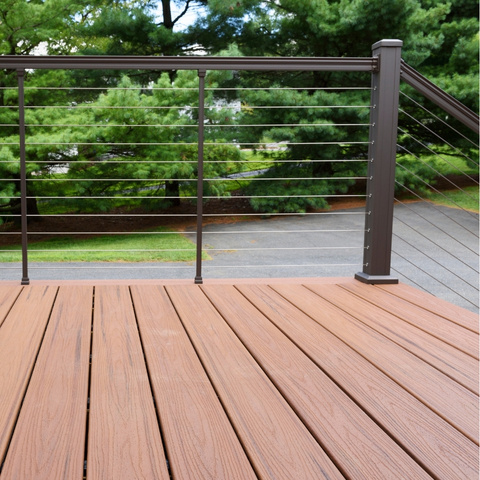
Stainless steel cable runs between posts and keeps views open. Cables must stay tight to hold the 4-inch opening limit when someone pushes on them, so post spacing and end-post stiffness matter. Plan to check and retension cables periodically.
Glass
Glass panels give the most open view. Glass used in guards must be safety glazing, and the panels need regular cleaning to stay clear. Glass systems carry a higher cost than most other options.
Railing Styles and Design Details
- Vertical balusters are the traditional choice and the easiest way to meet the 4-inch opening rule.
- Horizontal infill gives a modern look. The IRC does not prohibit it, but some families with young children avoid it because the rails can be climbed.
- Drink rails add a wide flat cap on top of the railing for setting down plates and cups.
- Post cap and under-rail lighting improves visibility on stairs and deck edges after dark.
- Mixed materials such as wood posts with aluminum or cable infill combine a warm frame with an open view.
Post Connections Matter More Than Infill
A railing is only as strong as its posts. When someone leans on the top rail, the force travels down the post and tries to pull the post and rim joist away from the deck framing. Testing at Virginia Tech in 2015 examined this outward failure, and connector manufacturers developed tension-tie hardware and tested blocking details in response, according to a Simpson Strong-Tie summary.
In practice, this means wood guard posts need a connection detail that ties back into the deck joists, not just two bolts through the rim. Manufactured railing systems specify their own post mounts and maximum spacing, and those instructions are part of what makes the system code compliant.
A wobbly post on an existing deck usually points to a loose connection, rot at the base of the post, or a weak rim joist. Those conditions call for deck repairs before any new railing is installed.
Railing Maintenance in Kansas City Weather
Freeze-thaw cycles, humid summers and seasonal swings cause wood to swell and shrink, which loosens fasteners over time. Check every post and rail section once a year by pushing on the top rail at several points.
- Retighten or replace loose bolts and screws.
- Look for soft wood or dark staining at post bases, where water collects.
- Reseal or restain wood railings when water stops beading on the surface.
- Touch up chips in powder-coated finishes.
- Check cable tension each spring and fall.
Common Railing Mistakes
- Measuring guard height from the wrong point, or forgetting that a later layer of decking reduces the height.
- Leaving more than 4 inches under the bottom rail.
- Mixing components from different railing systems.
- Skipping the handrail on stairs with four or more risers.
- Installing a new railing on old framing without checking the rim joist and post bases.
Choosing Deck Railing Options for Your Project
- Guards are required where a deck is more than 30 inches above grade, and they must be at least 36 inches tall with openings under 4 inches.
- Wood, composite, aluminum, steel, cable and glass can all meet code; maintenance, appearance and cost separate them.
- Post connections carry the load, so the attachment detail matters as much as the material.
- Confirm the adopted code edition and local amendments with the city before ordering materials.
Plan Your Deck Railing A.I. Building KC designs and builds custom decks and railings across the Kansas City metro, with post connections detailed for code. Contact our team to compare railing materials for your deck and request a free quote. |