You’re planning a deck for your Kansas City home and you have a quote call scheduled. The contractor is going to ask what material you want — and if you don’t know yet, the conversation gets murky fast. Knowing how to choose decking material before that call puts you in a much better position to make a decision that fits your property, your lifestyle, and how much time you want to spend maintaining it.
This guide covers the key factors to weigh — material type, climate performance, and maintenance requirements — so you walk into that conversation ready.
The two materials most homeowners are choosing between
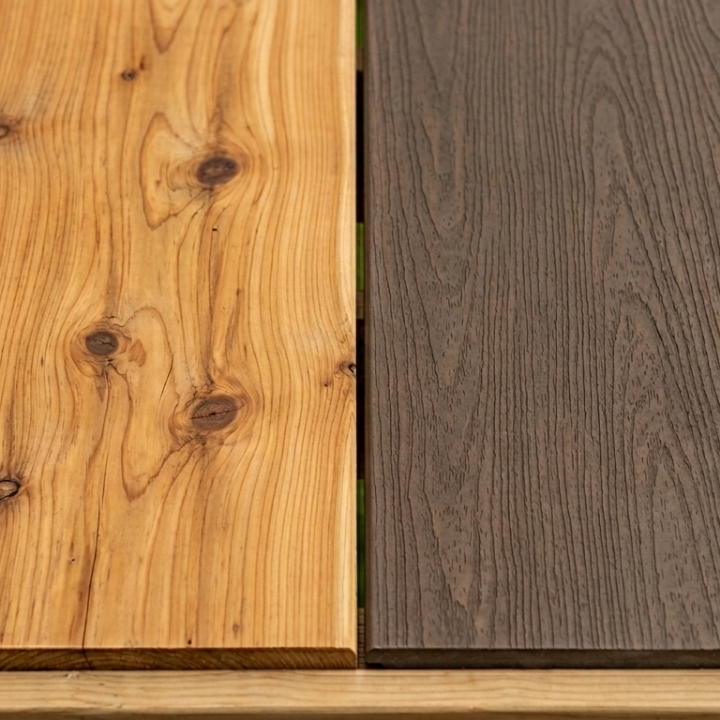
For residential decks in the Kansas City area, the decision almost always comes down to pressure-treated wood or composite decking. Cedar and redwood are options but are less common locally due to availability. Here’s the basic breakdown:
Pressure-treated wood
- Widely available and easy to source through local suppliers
- Requires regular maintenance: sealing or staining every one to two years to protect against moisture, UV damage, and Kansas City’s freeze-thaw cycles
- Prone to warping, cracking, and splintering over time if maintenance lapses
- Lifespan: 15–20 years with consistent upkeep, depending on climate conditions and wood grade
Composite decking (e.g. Trex, TimberTech, Fiberon)
- Made from a blend of wood fibers and recycled plastic — resists rot, splintering, and insect damage
- Low maintenance: periodic cleaning with soap and water, no sealing or staining required
- Holds up better through humidity and temperature swings
- Lifespan: 25–50 years depending on product line; most major brands carry 25-year warranties, with some lines offering up to 50 years on fade and stain resistance
How Kansas City’s climate factors in
Kansas City gets hot, humid summers and hard winters with freeze-thaw cycles that are rough on exposed wood. Pressure-treated wood expands and contracts significantly with temperature and moisture changes. Over several seasons, that movement causes boards to cup, crack, and splinter — especially if maintenance falls behind.
Composite handles these conditions better. The wood-plastic blend resists moisture absorption, so it doesn’t swell and shrink the same way. That said, composite can get hot underfoot in direct summer sun. In full sun, composite deck surfaces can run significantly hotter than the surrounding air temperature — a real consideration if kids or pets use the deck heavily.
The good news: color choice matters more than material here. Lighter-colored composite boards absorb less heat than darker ones. Several manufacturers also offer heat-mitigating product lines — worth asking about if your deck faces direct afternoon sun. Wood surfaces also heat up in summer sun, though composite tends to retain heat slightly longer before cooling.
Four questions to answer before the call
A contractor can give you a useful, accurate quote faster if you already have answers to these:
- What’s your maintenance tolerance?
Be honest. A lot of homeowners plan to maintain a wood deck and don’t. Neglected wood deteriorates quickly in this climate. Sealing or staining every one to two years is what’s required to keep pressure-treated wood in good shape. If that’s not realistic for you, composite is the more practical choice.
- How long are you staying in the house?
If you’re selling in a few years, a clean wood deck may serve you fine. If this is a long-term home, composite’s extended lifespan and minimal upkeep start making more practical sense over a 20- to 30-year window.
- How much sun exposure does the deck get?
A deck in full afternoon sun in a Kansas City summer is a different situation than one with shade from the house or trees. This affects both material performance and comfort underfoot — especially if you’re leaning toward composite.
- Do you have a preferred look?
Composite has come a long way aesthetically. Premium lines from Trex, TimberTech, and Fiberon are difficult to distinguish from real wood. But some homeowners prefer genuine wood and are willing to do the maintenance. That’s a valid choice — as long as it’s made with clear eyes on what it requires.
What you don’t need to decide before the call
You don’t need to pick a specific brand, color, or board profile before talking to a contractor. That’s part of what the consultation is for. What matters is that you know your material direction and have thought through your priorities.
A contractor who knows you’re leaning composite with low-maintenance as the priority can bring specific product options to the table. That’s a much more productive conversation than starting from zero.
Key takeaways
- Pressure-treated wood requires annual or biannual sealing and is more vulnerable to Kansas City’s freeze-thaw cycles.
- Composite resists moisture and temperature swings better, and needs minimal upkeep beyond regular cleaning.
- Composite can get hot in direct sun — lighter colors and heat-mitigating product lines help manage this.
- Lifespan depends on material and maintenance: wood averages 15–20 years with upkeep; composite typically runs 25–50 years.
- Know your maintenance tolerance, sun exposure, and how long you’re staying before the contractor call.
Ready to get a quote? A.I. Building KC builds custom decks across the Kansas City area in both wood and composite. View our Custom Decks page or request a free quote — bring your questions, we’ll work through the options with you.