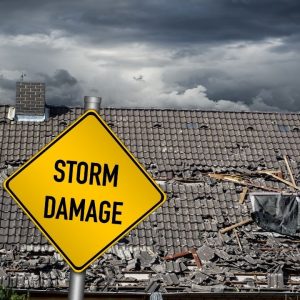
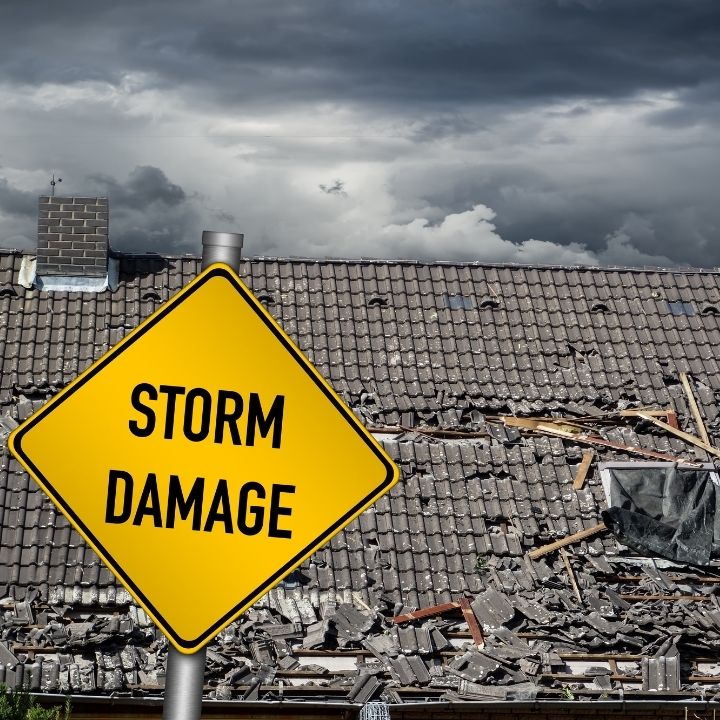
Kansas City storms move fast and leave damage behind before most homeowners have a chance to react. Hail, high winds, and heavy rain can compromise your roof in ways that are not always visible from the ground. Knowing the right steps after a storm can protect your home and make the insurance process straightforward. If your property took damage, our residential roofing services cover everything from inspections to full replacements across the KC metro.
Start With a Ground-Level Assessment
After a storm passes and it is safe to go outside, walk the perimeter of your home and look for visible signs of roof damage. Do not climb onto the roof. A ground-level inspection can reveal a lot before a contractor or adjuster ever arrives.
Look for these indicators:
- Shingles on the ground or in the yard
- Granules collecting in gutters or downspout splash blocks
- Dented or bent gutters and downspouts
- Damaged fascia or soffit
- Dented HVAC equipment or vent caps visible on the roofline
If you spot any of these after a storm, treat it as a signal to have the roof professionally inspected before assuming everything is fine.
Document Everything Before Anyone Touches the Roof
Before any repairs begin, document the condition of your roof and property thoroughly. This protects you during the insurance claim process and gives adjusters clear evidence tied to the storm event.
Use your phone to photograph and video the following:
- Any visible damage from the ground, taken from multiple angles
- Damaged gutters, siding, windows, or exterior features
- The interior of your attic if you notice water intrusion or staining
- National Weather Service alerts or hail reports for your ZIP code
Date-stamp your photos and keep them organized. Missouri insurers anchor claims to a specific storm event, so tying your documentation to a confirmed weather date strengthens your position significantly.
Contact Your Insurance Provider Promptly
Once you have documentation, contact your homeowner’s insurance provider to report the damage and open a claim. Missouri law does not set a single statewide deadline, but most policies have their own reporting windows. Some require claims within 60 days of the storm; others allow up to 12 months. A few carriers extend that window, but waiting increases the risk of denial.
When you call, have the following ready:
- Date and time of the storm
- A description of the visible damage
- Your photo and video documentation
- Your homeowner’s policy number
Your insurer will assign an adjuster to inspect the damage and determine coverage. Do not wait for that visit before getting a contractor on-site.
Get a Professional Roof Inspection Before the Adjuster Arrives
A licensed roofing contractor should inspect your roof before or during the insurance adjuster’s visit. A professional inspection gives you an independent assessment and ensures hail bruising, granule loss, and underlayment damage do not get missed. Our roofing team provides free, honest inspections with no pressure and no upsells.
In Kansas City, hail is one of the most common causes of roof claims. Impact damage can crack shingles, compress the granule layer, and weaken seal strips without leaving signs that are obvious from the ground. A contractor experienced in storm damage knows where to look and how to document it for the insurance record.
You have the right to have your contractor present during the adjuster’s inspection. Take advantage of that.
Protect Your Home While You Wait for Repairs
If your roof has active leaks or exposed areas, temporary protection prevents water intrusion from compounding the damage. Mold growth and structural deterioration can develop quickly once the roof envelope is breached.
Common temporary protective measures include:
- Tarping exposed or missing shingle areas
- Placing towels or buckets inside under active leaks
- Removing standing water from attic spaces if accessible
Keep receipts for any emergency materials or labor. Many insurance policies reimburse reasonable temporary repair costs when they are taken to prevent further damage. If your interior was affected, our premium home renovations team handles water restoration and structural repairs as well.
Understand What Your Policy Actually Covers
Homeowner’s insurance policies differ significantly in how they handle roof claims. Missouri homeowners should understand two key coverage types before the adjuster arrives.
Actual Cash Value (ACV)
ACV policies pay the depreciated value of your roof based on its age and condition. A 15-year-old roof may receive only 40 to 60 percent of full replacement cost. Older roofs on ACV policies can leave significant out-of-pocket costs.
Replacement Cost Value (RCV)
RCV policies cover the cost to replace the damaged portion of your roof with comparable materials at current market prices. These policies provide stronger protection after a major storm event.
Missouri also follows reasonable matching standards. If an insurer replaces only a portion of your roof and the new materials do not match the existing shingles in color or texture, you may qualify for full slope or full roof replacement depending on your policy and the insurer’s assessment.
If the settlement offer seems low or the scope of repairs appears incomplete, you have the right to request a re-inspection or provide documentation from a second licensed contractor.
Choose a Local, Licensed Contractor for Repairs
After a major storm, out-of-state contractors frequently work Kansas City neighborhoods. These storm chasers often operate without local licenses, carry inadequate insurance, and disappear once payment is collected. Homeowners are left with no recourse when problems surface months later.
When selecting a contractor for storm roof repairs, verify the following:
- Active contractor’s license in Missouri or Kansas
- Proof of general liability and workers’ compensation insurance
- A local business address and verifiable references
- Written estimates with itemized scope of work
A.I. Building Solutions is a licensed Kansas City general contractor, GAF and CertainTeed certified, and GACO roof coating certified. We handle storm damage repairs and full roof replacements across Jackson, Cass, and Johnson counties. If financing is a consideration, we offer flexible project financing to help keep repairs moving without delay.
What to Expect During the Repair Process
Once your claim is approved and a contractor is scheduled, the repair process typically follows a clear sequence. Your contractor should walk you through each step before work begins.
- Material selection and order confirmation
- Removal of damaged shingles, flashing, and underlayment
- Inspection of the roof deck for water damage or rot before new materials go down
- Installation of new underlayment, ice and water shield where required, and shingles
- Flashing replacement around chimneys, vents, and roof penetrations
- Final inspection and cleanup
A complete roofing system includes proper ventilation, correctly installed underlayments, and sealed flashing. Shingles alone are not a roof. Verify that your contractor’s scope of work covers the full system, not just the visible surface.
Next Steps for Kansas City Homeowners
Storm roof damage is manageable when handled in the right order. Inspect from the ground, document early, contact your insurer, and get a licensed contractor on-site before the adjuster arrives. Working with a local team that knows Kansas City codes, weather patterns, and the insurance process keeps repairs on track from inspection through final sign-off.
A.I. Building Solutions provides free roof inspections for Kansas City homeowners following storm events. We document damage thoroughly, work directly with adjusters, and stand behind every repair we complete. View our residential roofing services or contact us to schedule an inspection.