Container home insulation in Kansas City decides whether a steel shell becomes a comfortable home or a metal box that sweats in summer and freezes in winter. The metro sits in a mixed-humid climate where winter lows near 13 degrees and humid summers near 91 degrees push moisture at the steel from both directions. The right insulation controls temperature and stops condensation before it turns into corrosion.
Why Steel Makes Insulation Non-Negotiable
Steel conducts heat and cold straight through the wall. When outdoor temperatures shift, the metal shell transfers that change directly into the living space, so a bare container heats up and cools down fast. The bigger threat is condensation. Warm, humid indoor air meets the cold steel, reaches its dew point, and water forms on the wall. Left unmanaged, that moisture drives rust on the structure and mold on interior finishes.
The same thermal behavior shows up across steel frame construction, but a container concentrates it because the wall is a single sheet of corrugated steel with almost no thermal break. Insulation is what creates that break.
The Kansas City Climate Problem
Kansas City sits in Climate Zone 4A, classified as mixed-humid, on both the Missouri and Kansas sides of the metro. That designation matters. Winter design temperatures drop to around 13 degrees, and summer highs reach about 91 degrees with heavy humidity, a swing of nearly 80 degrees across the year.
A mixed climate stresses the wall in both directions. In winter, warm indoor moisture condenses on cold steel. In summer, humid outdoor air can condense on steel that air conditioning has cooled. Insulation here has to manage heating loads, cooling loads, and moisture at the same time. A system tuned for only one season fails in the other.
Why Closed-Cell Spray Foam Is the Standard
Closed-cell spray foam is the material most builders use in container homes, for structural reasons. It delivers roughly R-6 to R-7 per inch, the highest thermal resistance among common options, so a 3-inch application reaches about R-18 to R-21 without stealing much interior space. It does three jobs at once: it insulates, seals air leaks, and acts as a vapor barrier.
Sprayed directly onto the steel, the foam expands into every corrugation and corner, leaving no gap where condensation could form. It bonds to the metal, adds rigidity to the wall, and resists water infiltration.
Builders apply the same closed-cell approach to a barndominium and other steel-shell structures for the same reason: the material that insulates also stops moisture from reaching the steel.
The Vapor Barrier Mistake That Traps Moisture
The most damaging insulation error in a container home is doubling the vapor barrier. The steel shell already acts as a vapor barrier on the outside. Add a plastic vapor barrier on the inside and moisture gets trapped between two impermeable layers with nowhere to dry. That trapped water corrodes the steel from within.
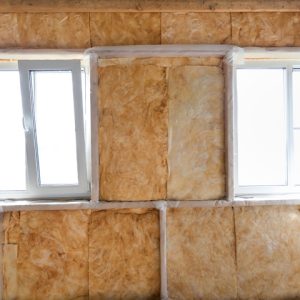
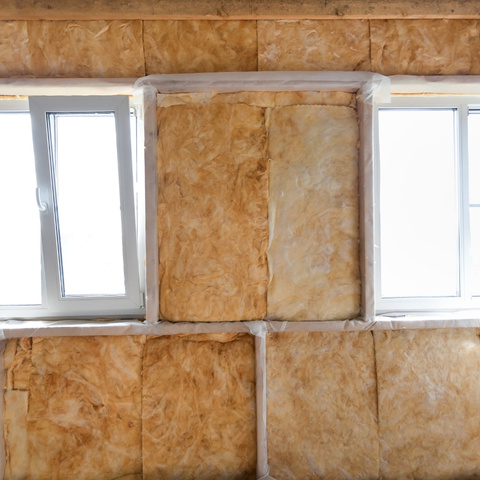
Fiberglass batts create the same failure. Warm air passes through the batt, condenses on the cold steel behind it, and feeds rust and mold that stay hidden until the damage is done. Closed-cell foam avoids this by bonding to the steel with no air gap. Open-cell foam does not qualify as a vapor barrier and needs a separate, carefully placed vapor retarder, which is why closed-cell is the safer default in this climate.
How Much Insulation Your Build Needs
Code sets minimum envelope R-values, and the exact numbers depend on which energy code edition your city or county has adopted. Zone 4 wall minimums generally land in the R-13 to R-20 range, and ceilings run higher, from roughly R-19 up to R-49 or more. Kansas City’s local amendments differ from the base code and from neighboring jurisdictions, so confirm the figures with your building department before you spec insulation.
Two rules hold regardless of the exact numbers. The roof and floor need more insulation than the walls, since heat gain and loss concentrate there. And a container is insulated with continuous spray foam rather than cavity batts, so compliance is shown differently than in a stick-built wall.
Insulation is easiest and cheapest to get right during interior finish work, before drywall and cabinetry go in. Retrofitting it later means tearing finishes back out.
Interior or Exterior Application
Spray foam goes on the inside or the outside, and the choice affects usable space. Interior application is common and straightforward, but every inch of foam is an inch of living space lost inside an already tight footprint. Exterior application, sprayed under the siding, preserves interior room and keeps the steel warmer, which further lowers condensation risk.
Many builds finish over the foam either way: framing and drywall inside, siding outside. The high R-value per inch of closed-cell foam is what makes both approaches work without thick, space-eating walls.
The Bottom Line on Container Home Insulation in Kansas City
Container home insulation in Kansas City comes down to controlling moisture as much as temperature. Closed-cell spray foam applied directly to the steel handles both: it insulates to Zone 4A demands, seals air, and stops condensation at the source. Skip the second vapor barrier, insulate the roof and floor heavier than the walls, and confirm code figures with your local building department.
For buyers planning the full build, financing can fold insulation into the project budget rather than leaving it as an afterthought that gets cut to save money.