The quote covers year one. Steel building maintenance and the design decisions behind it set what every year after that costs, and most of those decisions get made during a fifteen minute conversation about panel type and insulation before anyone is thinking about year fifteen. A steel structure is among the lowest maintenance building types available, but low is not zero, and the difference between a building that needs a walkthrough and a building that needs a roof is usually traceable to the original specification.
The Ownership Curve Starts at the Quote
Two buildings can look identical from the road and carry entirely different service obligations. Panel attachment method, insulation assembly, coating system, and how penetrations were detailed determine whether the owner is managing thousands of small seals or almost none.
None of that is visible after construction. It is visible on the drawings and in the scope, which is why the questions worth asking come before the order, not after the first leak. Ownership cost is designed in, not maintained away.
Fasteners Are the Wear Item on a Screw Down Roof
Exposed fastener panels, also called screw down or through fastened, attach with screws driven through the panel face into the structure below. Each screw carries an EPDM or neoprene washer that compresses to seal the penetration. The system is proven, economical, and forgiving of an imperfect substrate, which is why it dominates agricultural and light industrial construction.
The trade off is arithmetic. A large building carries thousands of penetrations through the weatherproofing, and each one stays dry because of an independent piece of compressed rubber. Those washers are consumable. Industry practice puts them in the range of ten to twenty years before they need real attention, though exposure, slope, and installation quality move that considerably.
Thermal movement compounds it. Metal expands and contracts daily, and a face screw pins the panel rather than letting it move. Over years of cycling, that stress can elongate the holes around fasteners and reduce the seal. The maintenance is straightforward when it happens on schedule, involving inspection, retorquing to specification, and washer replacement where needed. Deferred for a decade, the same condition compounds into systemic leakage rather than a service item.
Standing Seam Moves Instead of Resisting
Standing seam panels lock together at raised vertical ribs, with fasteners concealed underneath the seam on clips. Those clips allow the panel to float and accommodate expansion and contraction without stressing the attachment points.
Removing penetrations from the water shedding surface changes the maintenance profile fundamentally. Service life commonly lands in the forty to seventy year range with proper installation, compared with roughly twenty to thirty years before a screw down roof needs meaningful fastener work. Inspection is still required, but there is no population of consumable seals to replace.
The premium is paid at construction. Whether it returns depends on how long the building is held, what is stored under it, and how disruptive a leak would be. For a structure holding equipment, inventory, or finished living space, the calculation usually favors moving the cost forward, and financing options for home projects can keep that decision about performance rather than about what fits this quarter.
Condensation Is the Failure Nobody Budgets For
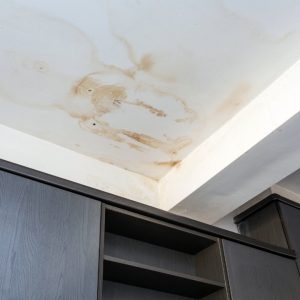
Steel conducts heat rapidly, which means interior surfaces track outdoor temperature closely. When warm humid air inside the building contacts a surface at or below the dew point, moisture forms. It drips from purlins and panel undersides, corrodes components, degrades insulation performance, and destroys whatever is stored below.
Owners frequently report this as a roof leak, and it is not. The MBMA Energy Design Guide for Metal Building Systems addresses two distinct problems, visible surface condensation on windows, framing, panels and ceilings, and concealed condensation inside the assembly where moisture has passed the vapor retarder. The second is more expensive because it is invisible until the insulation has already failed.
Three principles govern control.
- The vapor retarder belongs on the warm side of the assembly, with enough insulation outboard of it to keep its surface above the interior dew point
- Perm rating determines effectiveness, and a Class I vapor retarder is rated at 0.10 perms or lower
- Continuity matters as much as R-value, so every seam, joint, and penetration in the facing has to be sealed
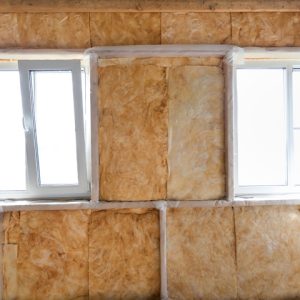
Two installation details cause a disproportionate share of problems. Insulation used as a closure at the eave or the base of the slab will wick water into the assembly, so the vapor retarder needs to be wrapped over the insulation ends. And open cell spray foam applied under a metal roof is vapor permeable, which allows moisture to migrate to the cold steel and condense behind it where nothing can dry.
Unconditioned buildings are not exempt. Condensation forms on cold steel whenever interior air is warmer and more humid than the surface, heated or not, which is why a condensation blanket is the baseline recommendation even for open storage.
Coatings, Sealants, and the Parts With Their Own Clocks
Panel finishes carry their own service expectations. Painted systems are warranted separately for chalk, fade, and film integrity, and the warranty terms differ substantially between coating chemistries. Reading those terms at purchase is the only practical way to know what the appearance of the building will be in twenty years.
Sealants have a shorter life than anything else on the structure. They appear at panel laps, ridge and eave closures, curbs, roof penetrations, gutter joints, and around door and window openings. Sealant is a service item on a repeating cycle, not a permanent component, and most water intrusion in an otherwise sound building traces to a joint that was never revisited.
A handful of conditions accelerate everything. Dissimilar materials in contact with panels cause galvanic corrosion, and industry guidance lists copper, lead, graphite, treated lumber, and mortar among them. Water discharged directly onto panels from gutters or mechanical equipment concentrates wear in one place. Curbs and protrusions secured without allowance for thermal movement transfer stress into the panel rather than absorbing it.
Steel Building Maintenance on a Schedule
Predictable work stays cheap. Unscheduled work does not.
An annual walkthrough covers gutters and downspouts cleared, ground level inspection of panels and trim, doors and hardware operating correctly, and a look at the interior for staining or corrosion that indicates moisture activity.
A professional inspection every two to three years covers fastener condition and torque, sealant adhesion at every joint and penetration, flashing at roof transitions, evidence of thermal movement damage, coating condition, and gutter attachment points.
After any severe weather event, panels and trim should be checked for impact, seams and closures for displacement, and the interior for new water entry, with documentation captured while the evidence is fresh.
What Insurance and Resale Do With the Records
Two ownership costs sit outside the building itself and both respond to documentation.
Carriers rate structures partly on construction type, and a steel framed building is classified differently from wood framed construction for that purpose. What the classification is worth varies by carrier, by occupancy, and by what is stored inside, so the productive move is asking the agent directly how the structure is being rated rather than assuming a discount applies.
Weathertightness warranties on standing seam systems frequently carry conditions, including required inspections and limits on who may perform work or make penetrations. A warranty voided by an unrecorded roof mounted antenna is a cost that surfaces at the worst moment. Transferability at sale is worth confirming at purchase rather than at closing.
Maintenance records themselves carry value. A file showing fastener inspections, sealant service, and post storm documentation supports a claim, satisfies a warranty condition, and answers the questions an appraiser or a buyer will ask. This matters most on residential steel structures, where lenders and appraisers evaluate the building on its own terms and a documented service history removes the uncertainty that otherwise drives a conservative valuation.
What Kansas City Conditions Do to the Interval
Climate zone 4A delivers humid summers and a genuine winter, and the daily temperature swing is what drives thermal movement in the panels. A structure here cycles harder than one in a stable climate, which shortens the practical interval between fastener inspections on a screw down roof and increases the value of a system that accommodates movement by design.
Humidity is the other factor. Summer moisture combined with a slab that stays cool creates exactly the conditions that produce condensation in an under insulated building, and an unheated shop or storage structure with no vapor control will run wet through large parts of the year.
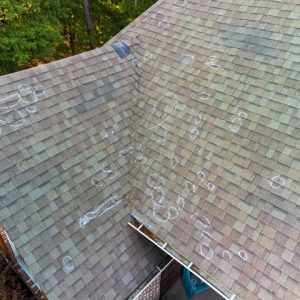
Hail matters as well. Steel panels resist impact far better than most coverings, but heavy hail can dent and mark them, and dents in the flat of a panel are cosmetic while damage at a seam or a closure is not.
The Decisions That Set the Curve
Panel attachment determines whether the roof has consumable seals. Insulation and vapor control determine whether the building manages moisture or accumulates it. Coating selection determines what the structure looks like in two decades. Detailing at penetrations and closures determines where sealant work will be required and how often.
All four are settled before the first piece of steel arrives, and none of them are practical to change afterward. Steel frame construction earns its reputation for durability when those decisions are made deliberately rather than defaulted to whatever the lowest bid assumed.
Specify It Right the First Time A.I. Building Solutions walks through panel attachment, insulation and vapor control, and penetration detailing before the order goes in, so the ownership cost is decided on purpose. Veteran owned general contractor serving Jackson, Cass and Johnson counties. GAF Commercial, GACO and IICRC certified. Call (816) 835-2094. |