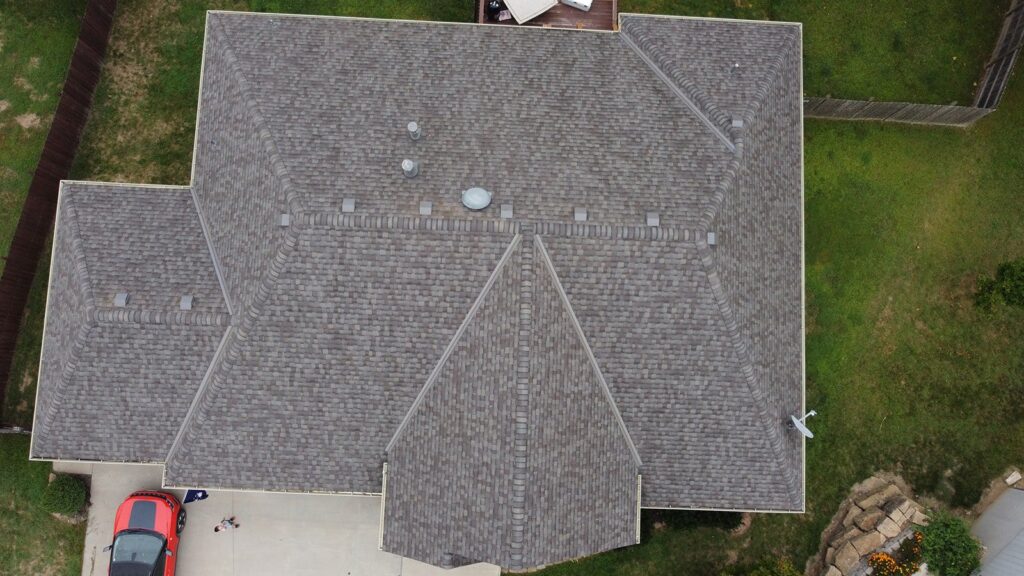
How long do asphalt shingles last in Kansas City is a different question than how long the warranty runs. The metro combines hail, hard freeze-thaw cycling, humid summer heat, and severe storm seasons in a way that ages a roof faster than the national averages printed in manufacturer brochures. This guide covers realistic lifespan ranges by shingle type, the local conditions that subtract years, and the signs a roof is wearing out ahead of schedule.
Realistic Lifespan by Shingle Type
Two shingle families cover most Kansas City roofs, and they age on different timelines.
- Three-tab shingles are the lighter, flat-profile product common on older roofs and budget builds. In this climate they typically deliver 15 to 20 years of service. Their single-layer construction gives hail and wind less material to work through, so storm exposure tends to define their real lifespan more than age does.
- Architectural shingles, also called dimensional or laminate shingles, are thicker and layered. In the Kansas City area they commonly reach 20 to 30 years, with the upper end depending on attic ventilation, exposure, and how many major hail events the roof absorbs along the way.
- Class 4 impact-rated shingles carry the highest rating for impact resistance and hold up to hail measurably better than standard products. They are not hail-proof. A severe storm can still damage them, but they widen the odds of a roof reaching the far end of its lifespan range, and many insurers discount premiums for them.
Installation quality sits underneath every one of those ranges. Incorrect nailing, missing starter courses, and poor flashing work can take years off any shingle regardless of its rating.
Why Kansas City Weather Shortens Shingle Life
The metro sits in climate zone 4A, which means roofs here absorb genuine winter and genuine summer every year. Each season leaves its own mark.
- Hail is the region’s defining roof hazard. Impacts knock protective granules loose and bruise the asphalt mat underneath, and that damage compounds with every storm season even when no single event justifies a claim. Knowing what to do after storm damage matters because the clock on insurance claims starts before visible leaks appear.
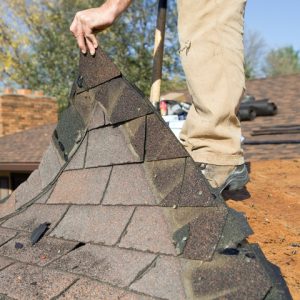
- Temperature swings drive freeze-thaw and thermal cycling. Shingles expand in summer heat and contract in winter cold, and that constant movement fatigues the asphalt, leading to cracking and curling as the material loses flexibility with age.
- Summer heat and sun bake roofs for months. South and west facing slopes take the most UV exposure and routinely age faster than the shaded sides of the same roof.
- Poor attic ventilation cooks shingles from below. A sealed, overheated attic can push shingle temperatures well past what sun alone produces, accelerating granule loss and curling across the entire roof.
Warranty Numbers vs Real Service Life
Manufacturer warranties on architectural shingles are often marketed as limited lifetime coverage, and three-tab warranties commonly run 25 years or more. Those figures describe coverage terms, not expected service life, and the coverage typically prorates down sharply after the first decade. Warranties also exclude the exact hazards that end most Kansas City roofs, since hail and wind damage fall under homeowner insurance rather than manufacturer coverage. The practical takeaway: treat the warranty as a defect policy and the lifespan ranges above as the planning number.
Signs Your Shingles Are Aging Faster Than They Should
A roof announces its decline before it fails. Granules collecting in gutters and downspouts signal the protective surface is wearing away. Curling or cupping edges show the asphalt has lost flexibility. Cracked shingles, bald patches, and dark streaks that will not wash away all point the same direction. Any of these appearing on a roof under 15 years old suggests something beyond normal aging, usually storm damage, a ventilation problem, or an installation defect. The full list of signs you need to replace your roof covers how to tell repairable wear from a roof at the end of its life.
How to Get the Full Lifespan From Your Roof
Reaching the top of the lifespan range is mostly a matter of removing the accelerants. Keep attic ventilation and insulation balanced so the roof deck stays close to outdoor temperature. Have the roof inspected after significant hail, not just when a leak shows up. Keep gutters clear so water drains instead of backing under the shingle edge. Trim branches that drop debris and shade sections into constant dampness. Professional residential roofing services can baseline the current condition of a roof in a single inspection, which turns the lifespan question from a guess into a date you can plan around.
The Bottom Line for Kansas City Homeowners
Plan on 15 to 20 years for three-tab shingles and 20 to 30 for architectural products, with hail history, ventilation, and sun exposure deciding where a specific roof lands in that range. Warranty periods overstate what the local climate allows, and premature aging almost always traces to a correctable cause. A roof entering its second decade in this metro has earned an inspection either way, and if the answer turns out to be replacement, financing options for home projects can spread the cost instead of forcing a rushed decision.