The signs you need a roof inspection usually appear well before a leak does, and most of them are visible without setting foot on a ladder. A roof fails gradually, then all at once, and the gap between those two stages is where an inspection saves money. The six conditions below cover what to check and what each finding actually means. Homeowners weighing residential roofing services should work through this list first, because it determines whether the next call is a scheduling question or an emergency.
1. The Roof Has Reached the Age Where Problems Begin
Age is the most reliable trigger because it applies whether or not anything looks wrong. Materials have known service ranges, and a roof approaching the end of its range needs eyes on it regardless of appearance from the driveway.
- Three-tab asphalt shingles: roughly 15 to 20 years
- Architectural asphalt shingles: roughly 25 to 30 years
- Wood shake: roughly 20 to 30 years
- Metal panel systems: 40 years and up
- Clay or concrete tile: 50 years and up
Those ranges assume adequate ventilation and correct installation. A roof with poor attic airflow can lose a third of its expected life without any external cause, which is why age alone is a starting point rather than a verdict.
The other complication is unknown history. Anyone who bought a home without documentation on the roof is working from a guess. If the age cannot be established from records, an inspection establishes it from condition. Material choice drives the timeline, and it is worth understanding why asphalt shingles remain the common choice when evaluating what is currently on the house.
2. Shingle Damage Visible From the Ground
A slow walk around the perimeter with binoculars catches more than most homeowners expect. Climbing is unnecessary and unsafe, and the conditions that matter at this stage are large enough to see from below.
- Missing shingles, or shingles visibly displaced out of their course
- Curling or cupping along the edges, which indicates the mat has dried and lost flexibility
- Buckling that runs in a line, often tracing a problem in the decking underneath
- Dark patches where the surface granules have worn away and the mat is exposed
- A ridge line or field area that sags rather than running straight
Sagging is the finding that changes urgency. A dip in the roof plane points to compromised decking or framing, not a surface problem, and it does not improve on its own.
Isolated damage is often repairable. Damage appearing across multiple slopes generally means the roof has aged out uniformly, which is a different conversation. The overlap between the two is covered in more depth under signs a roof needs full replacement.
3. Granules Collecting in Gutters and Downspouts
Asphalt shingles are protected by a mineral granule surface that shields the asphalt mat from ultraviolet exposure. Once granules are gone, the mat degrades quickly, and the roof enters the final stage of its life.
Some granule loss is normal. A newly installed roof sheds loose granules for the first several months, and a light dusting in the gutters after installation means nothing. Ongoing accumulation years later means something entirely different.
- Sediment resembling coarse sand collecting at downspout outlets
- A layer of granules sitting in the gutter trough during routine cleaning
- Shingle surfaces that appear lighter or patchy compared to a few seasons ago
Granule loss concentrated below a single slope often traces to one cause, such as impact damage or runoff from an upper roof section. Loss distributed evenly around the house points to age.
4. Daylight, Staining, or Moisture in the Attic
The attic is the most informative place a homeowner can look, and almost nobody looks. A flashlight and twenty minutes on a dry day reveals conditions that are invisible from outside.
- Daylight visible through the roof deck, particularly around vents, pipes, and chimney chases
- Dark staining or streaking on the underside of the decking, which indicates past or ongoing water intrusion
- Insulation that is damp, matted, or compressed in isolated areas
- Frost accumulation on nails or decking during cold months, which signals a ventilation failure rather than a leak
- A musty odor, which usually precedes any visible staining
Frost deserves particular attention. Warm indoor air reaching a cold roof deck condenses and freezes, then melts and soaks the decking from above the ceiling. The damage looks identical to a leak and has nothing to do with the roof covering, which is exactly why it gets misdiagnosed and repaired incorrectly.
5. Ceiling Stains and Rising Energy Bills
By the time water reaches finished ceilings, it has been moving through the assembly for a while. Water travels along framing before it drops, so the stain rarely sits directly below the entry point.
- Brown or yellow ceiling rings, especially ones that grow or reappear after rain
- Bubbling or peeling paint on ceilings and upper walls
- Moisture or staining where a chimney or vent stack passes through
- Heating and cooling costs climbing without a change in usage or rates
The energy item surprises people. Wet insulation loses most of its thermal value, and a ventilation problem forces heating and cooling equipment to work against conditions in the attic. A utility bill that climbs year over year with no other explanation is worth treating as a roofing symptom.
6. Hail, High Wind, or Falling Debris Hit the Property
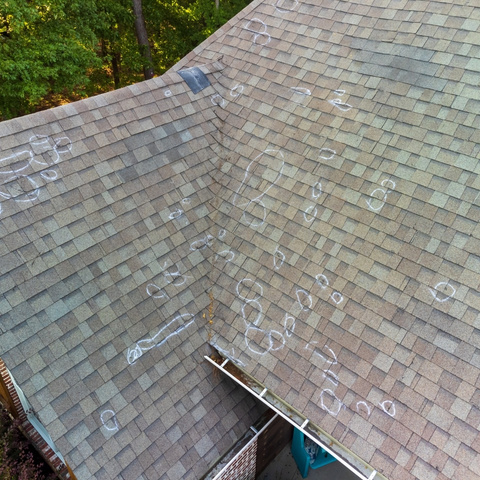
This is the sign that overrides everything else on the list, because storm damage frequently produces no visible symptom for months or years. A roof can be functionally compromised and look completely normal from the ground.
- Hail of roughly one inch or larger, and smaller hail on an aged or brittle roof
- Sustained wind or gusts in the range where shingle seals begin to fail, generally around 45 to 50 miles per hour
- Any limb or debris strike, regardless of how minor the impact appeared
- Heavy ice accumulation or ice damming along the eaves
Wind damage is the most commonly missed. A gust can break the seal strip and lift a shingle, which then lays back down flat and looks untouched. The seal never reforms, and water enters during the next driving rain. Hail bruising works similarly, fracturing the mat beneath a surface that still appears intact.
Timing matters here in a way it does not elsewhere on this list. Insurance carriers impose filing deadlines measured from the date of the storm, not the date the damage was discovered, so waiting for a symptom can forfeit coverage entirely. The documentation sequence is covered in what to do after a storm damages a roof.
Working Through the Checklist
One finding in one category is usually a watch item. Note it, check again in a few months, and schedule an inspection at a convenient time.
Findings in two or more categories mean the roof has a problem that is progressing. Any single item from the storm section means an inspection is due now, regardless of how the roof looks, because the claim window is running.
None of these checks substitute for a professional assessment. Seal strip condition, flashing integrity at walls and chimneys, decking soundness underfoot, and ventilation adequacy cannot be evaluated from the ground or the attic. A clean checklist means the obvious problems are absent, not that the roof is sound.
Catching a problem at the inspection stage keeps the scope small. A roof that gets addressed after water reaches the ceiling involves decking, insulation, and interior finishes on top of the roofing work, and flexible project financing exists because that scope expands faster than most budgets anticipate.
Ready to schedule a roof inspection?
We assess the roof covering, flashing, decking, and ventilation, then document what we find. Call (816) 835-2094 for a free quote.